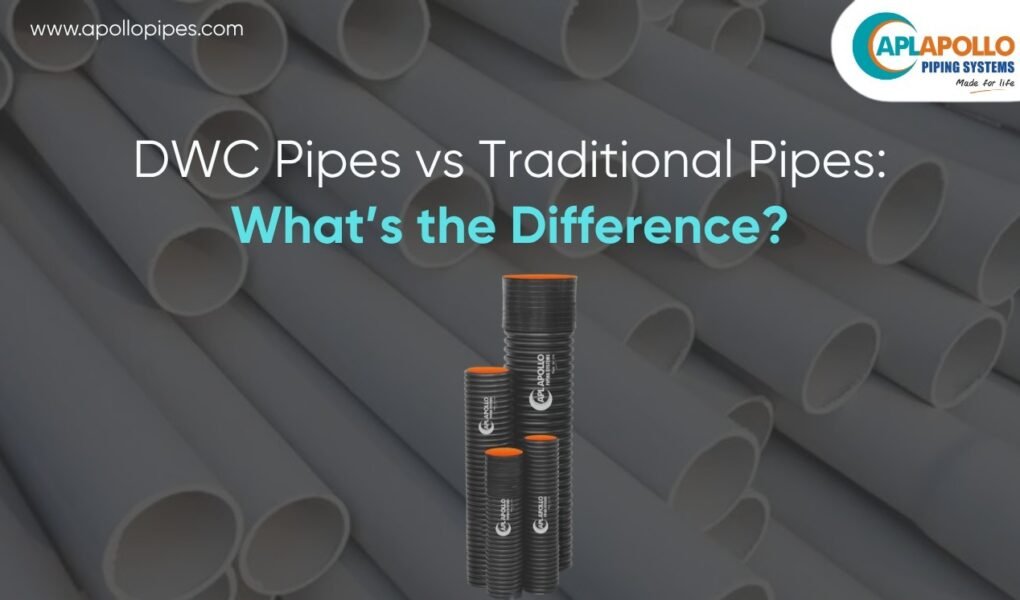
Choosing the right piping system is important for the performance, durability, and maintenance of drainage, sewerage, and stormwater infrastructure. Different projects have different requirements based on factors such as soil conditions, external loads, installation methods, flow requirements, and budget. DWC pipes, or Double Wall Corrugated pipes, are increasingly used for underground drainage and other infrastructure applications because of their distinctive double-wall construction. Compared with many conventional pipe designs, they combine a smooth internal surface with a corrugated external layer, giving them a different balance of flow performance, structural strength, weight, and flexibility.
What Are DWC Pipes?
DWC pipes are Double Wall Corrugated pipes designed primarily for underground drainage, sewerage, stormwater, and related applications. They are commonly manufactured using HDPE (High-Density Polyethylene).
Their defining feature is their two-layer construction. The inner wall is smooth, which provides a relatively low-friction surface for the movement of water and wastewater. This can support efficient hydraulic flow and reduce the tendency for material to accumulate inside the pipe.
The outer wall is corrugated, with a wave-like profile that provides structural stiffness and helps the pipe withstand external loads. This combination allows DWC pipes to offer structural support without requiring the entire pipe wall to be solid and heavy.
What Are Traditional Pipes?
The term traditional pipes can refer to several conventional piping options used in drainage and sewerage systems. These may include concrete or RCC pipes, as well as conventional solid-wall plastic pipes. Because these materials and designs have different characteristics, traditional pipes should not be considered a single category with identical performance.
Concrete and RCC pipes are commonly used for large-scale drainage, sewerage, culverts, and other civil infrastructure projects. Conventional solid-wall plastic pipes, meanwhile, are used across a range of drainage and utility applications depending on their material, pressure or stiffness class, and design.
The selection of a traditional pipe depends on project specifications, installation conditions, required strength, hydraulic requirements, and applicable standards.
DWC Pipes vs Traditional Pipes: Key Differences
The difference between DWC pipes and traditional piping systems can be understood by looking at their design, material, installation, and performance characteristics. While the right choice depends on the specific project, the following factors highlight how the two approaches differ.
1. Construction and Design
DWC pipes feature a double-wall structure. The inner wall is smooth to support efficient water flow, while the outer wall has a corrugated profile that provides stiffness and helps withstand external loads. Traditional pipes may have a solid-wall design or be manufactured from materials such as concrete and RCC, depending on their intended application.
2. Material Used
DWC pipes are commonly manufactured from HDPE (High-Density Polyethylene). Traditional drainage and sewerage pipes can be made from several materials, including concrete, RCC, PVC, uPVC, or other plastics. The material selected influences properties such as weight, flexibility, chemical resistance, and structural behaviour.
3. Strength and Load Resistance
The corrugated outer layer of DWC pipes provides structural stiffness while keeping the overall construction relatively lightweight. This makes them suitable for underground applications where pipes may be exposed to soil and external loads. The load-bearing characteristics of traditional pipes vary considerably depending on their material, wall thickness, reinforcement, and design.
4. Weight and Handling
One of the practical differences is weight. HDPE-based DWC pipes are generally lighter than many concrete or RCC alternatives. This can make transportation, handling, positioning, and installation more convenient, particularly on large infrastructure sites. Traditional pipes may require additional handling arrangements when their weight is high.
5. Hydraulic Performance
DWC pipes have a smooth inner surface, which helps reduce friction as water or wastewater passes through the pipe. This design can support efficient hydraulic performance. With traditional pipes, flow characteristics depend on the internal surface, material, diameter, pipe design, and operating conditions.
6. Flexibility
HDPE provides DWC pipes with a degree of flexibility that can be useful when underground routes encounter changes in alignment or ground conditions. Traditional pipes differ in flexibility according to their material. Rigid concrete and RCC pipes, for example, behave differently from flexible plastic piping systems.
7. Resistance to Corrosion, Chemicals, and Abrasion
HDPE DWC pipes offer resistance to corrosion and can withstand exposure to various chemicals and abrasive conditions. This can be useful in drainage and wastewater applications. The resistance characteristics of traditional pipes depend on the material used and the environment in which the pipe is installed.
8. Installation and Jointing
The relatively lightweight construction of DWC pipes can simplify transportation and installation. Depending on the product and system, joints may be made using suitable couplers or rubber ring systems. Traditional pipes use different jointing methods depending on whether they are made from concrete, RCC, or plastic.
9. Maintenance Requirements
The smooth internal surface of DWC pipes can help minimise conditions that encourage deposits inside the pipe. Their resistance to corrosion can also be useful in environments where moisture and chemically active wastewater are present. However, maintenance requirements for any drainage system ultimately depend on installation quality, operating conditions, pipe design, and the type of material being conveyed.
10. Durability and Service Life
DWC pipes are designed for underground applications where they may experience external loads, moisture, and varying environmental conditions. HDPE provides resistance to corrosion and abrasion, while the corrugated outer layer contributes to structural stiffness. Traditional pipes can also provide long-term service when correctly selected and installed, but their durability characteristics vary significantly by material.
11. Typical Applications
DWC pipes are commonly considered for underground drainage, stormwater drainage, sewerage, rainwater harvesting, and wastewater management. Traditional pipes continue to be used across drainage, sewerage, culvert, and infrastructure projects, with the appropriate material selected according to the project’s technical requirements.
12. Overall Project Practicality and Cost
Cost should not be assessed only by comparing the purchase price of pipes. Transportation, handling, installation, jointing, labour, maintenance, and expected service requirements can all influence the overall project cost. DWC pipes may offer practical advantages in projects where lightweight construction, easier handling, flexibility, and efficient installation are important. Traditional systems may remain suitable where their specific structural, design, or application requirements make them appropriate.
Overall, DWC pipes and traditional pipes serve different project requirements. The most suitable option should be selected after considering factors such as soil conditions, external loads, hydraulic requirements, installation depth, pipe stiffness, jointing method, applicable standards, and the intended application.
Why Are DWC Pipes Used in Modern Infrastructure?
DWC pipes are used in several infrastructure applications where a combination of structural performance, flow efficiency, flexibility, and ease of handling is useful.
l. Underground Drainage
Their double-wall design makes them suitable for underground drainage systems where pipes need to handle external soil loads while maintaining an effective internal passage for water.
2. Sewerage and Wastewater Systems
The smooth internal surface of DWC pipes can support the movement of wastewater and slurry while reducing internal resistance. HDPE also provides resistance to corrosion and chemicals, which can be relevant in wastewater environments.
3. Stormwater Drainage
DWC pipes can be used for carrying rainwater and stormwater in infrastructure projects. Their lightweight nature can be useful when transporting and installing pipes across large project sites.
4. Rainwater Harvesting
They can form part of underground rainwater collection and conveyance systems, helping move collected water between different components of a system.
5. Infrastructure and Utility Projects
Their combination of flexibility, structural stiffness, and relatively easy handling makes DWC pipes suitable for various underground infrastructure applications. However, the appropriate pipe class and installation method should always be selected according to project requirements.
APL Apollo DWC Pipes
APL Apollo DWC pipes are manufactured using HDPE (High-Density Polyethylene) and feature a double-wall design consisting of a smooth inner surface and a corrugated outer layer. The inner wall is designed for low friction and efficient hydraulic flow, while the corrugated exterior provides structural strength and stiffness.
These pipes are manufactured in accordance with IS 16098 (Part-2) and are available in SN4 and SN8 stiffness classes, with sizes ranging from 100 mm to 300 mm. Each pipe has a standard 6-metre length and uses rubber ring jointing for installation. The manufacturer lists high flexibility, leak-proof joints, durability, rigidity, resistance to chemicals, corrosion and abrasion, anti-rodent properties, optimal hydraulic performance, environmental sustainability, and quick installation among the product features.
APL Apollo also identifies applications including stormwater drainage, rainwater harvesting, and wastewater management. These characteristics make the product relevant for underground drainage and infrastructure projects where handling, flow, structural performance, and resistance to environmental conditions need to be considered together.